Is Microdosing Ozempic Safe? What the Dose Data, the Label, and Poison Center Reports Show
Is microdosing Ozempic safe? The honest answer is that nobody has run the trial. What exists is solid dose data showing side effects climb with dose, a label that starts low on purpose, and a growing file of poison center calls about people who measured wrong.
25-50%
OF THE LABELED STARTING DOSE: THE TYPICAL MICRODOSE, PER A 2026 COMMENTARY
20.3%
NAUSEA ON OZEMPIC 1 MG VS 15.8% ON 0.5 MG AND 6.1% ON PLACEBO (LABEL)
69.2%
OF GLP-1 POISON CENTER CASES WERE UNINTENTIONAL DOSING ERRORS (CLIN TOXICOL 2025)
Picture a woman who tried a full semaglutide schedule last year and quit after weeks of nausea. A friend tells her she now takes "a tiny bit" of Ozempic and feels fine. She wants to know whether that is a smart workaround or a risky one.
The question of whether microdosing Ozempic is safe gets asked constantly online, and most answers either wave it through or condemn it. Neither is supported. This article sets out what is actually known: how microdosing is defined, what dose-ranging trials say about low doses, what the Ozempic label requires at every dose, where the documented harms come from, and what happens when people stop. The woman described here is a composite example, not a real patient.
Key takeaways
- •No clinical trial has tested Ozempic microdosing, and a 2026 Expert Opinion on Pharmacotherapy commentary described high-quality evidence for GLP-1 microdosing as essentially absent.
- •Semaglutide side effects are dose-related: on the Ozempic label, nausea affected 15.8% of patients on 0.5 mg and 20.3% on 1 mg, compared with 6.1% on placebo.
- •Low doses still act: in a 2018 Lancet dose-ranging trial, the lowest daily semaglutide dose of 0.05 mg produced 6.0% weight loss at 52 weeks versus 2.3% on placebo.
- •The best-documented microdosing harm is measurement error, with poison centers reporting 10-fold overdoses from compounded semaglutide vials.
- •The Ozempic label's boxed thyroid warning and contraindications apply at any dose, including a microdose.
Is microdosing Ozempic safe?
Microdosing Ozempic has not been proven safe or unsafe, because no trial has studied it. Every safety number that exists for semaglutide comes from people taking labeled doses in clinical trials or in routine prescribing. Low-dose users were never studied as their own group.
That gap matters in both directions. It means claims that microdosing is "side-effect free" have no data behind them. It also means warnings that it is uniquely dangerous are guesses. What can be said with evidence is narrower: semaglutide's common side effects scale with dose, the label's warnings do not switch off at low doses, and the way microdoses are usually measured creates a specific risk of overdose.
Beck and Clements, writing in Expert Opinion on Pharmacotherapy in 2026, put it plainly. Early reports suggest less nausea and better adherence, they wrote, but safety concerns persist about compounded products, nonstandard dose measurement and dosing accuracy.
How does microdosing Ozempic work?
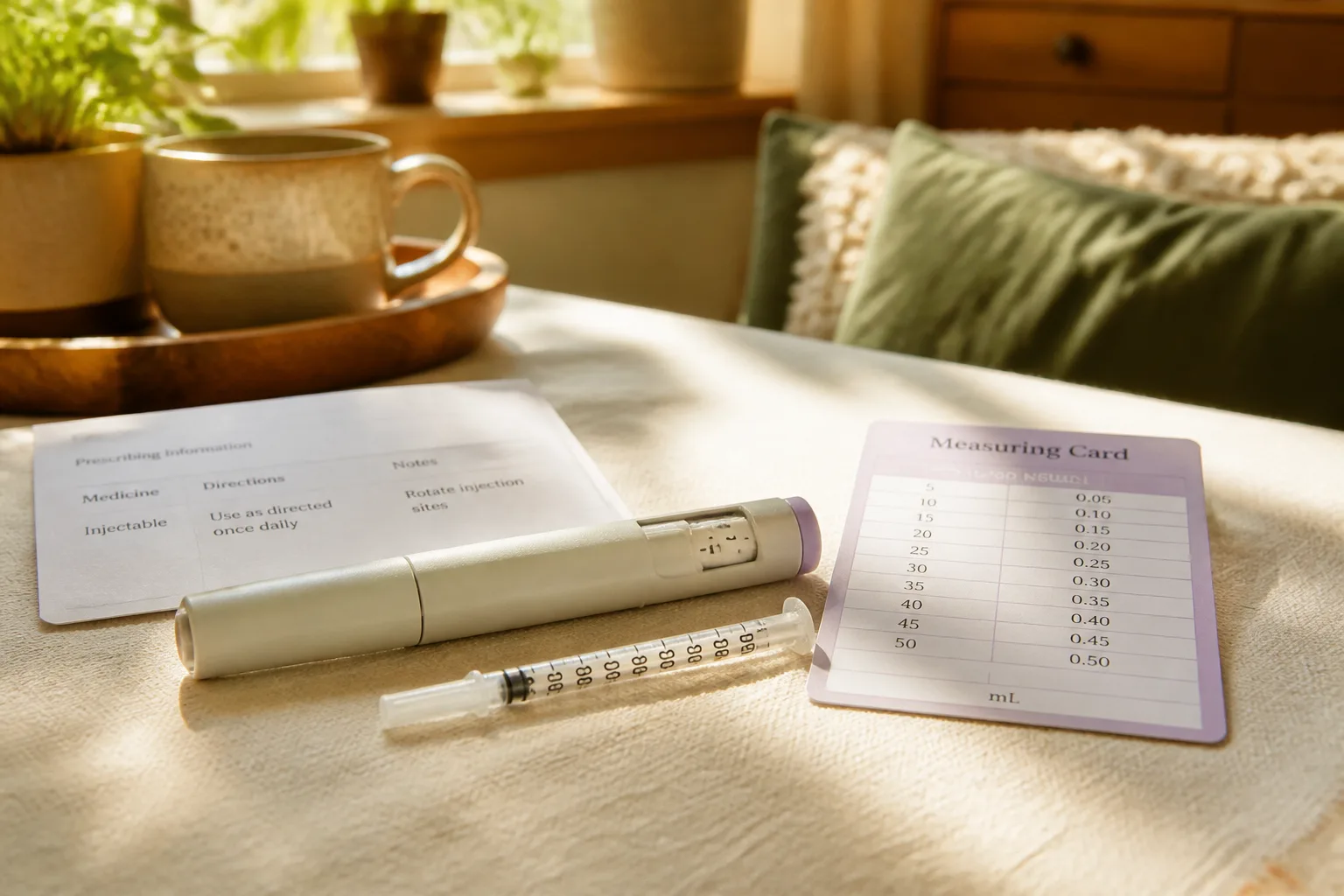
Microdosing Ozempic usually means taking 25 to 50% of the manufacturer's starting dose, or stretching a normal dose over a longer interval, according to the 2026 Beck and Clements commentary. The approach spread through patient communities, telehealth programs and clinician anecdotes during the semaglutide shortages. Techniques include counting clicks on multidose pens and extended-interval dosing.
The starting point is the label. Ozempic begins at 0.25 mg once weekly for 4 weeks, then rises to 0.5 mg, with further steps to 1 mg and 2 mg if more glucose control is needed. The label states that this slow climb exists "to reduce the risk of gastrointestinal adverse reactions." A microdose sits below even that first rung.
Semaglutide's half-life of about 1 week shapes everything else. Each weekly dose overlaps the one before it, so levels build over several weeks rather than resetting. Our article on weekly versus split-dose schedules walks through how that overlap works.
Does microdosing Ozempic work at such low doses?
Low semaglutide doses do produce measurable weight loss, but no trial has measured microdosing schedules as people actually use them. The closest evidence is a phase 2 dose-ranging trial by O'Neil and colleagues, published in the Lancet in 2018. It randomized 957 adults without diabetes to daily semaglutide at 0.05, 0.1, 0.2, 0.3 or 0.4 mg, liraglutide 3.0 mg, or placebo for 52 weeks.
Mean weight loss at week 52 by daily semaglutide dose (%)
O'Neil PM et al., Lancet 2018 (957 adults without diabetes, once-daily injections).
Doses in this trial were given every day, so the weekly totals are far higher than the daily figure suggests. Weight loss flattened between 0.2 and 0.3 mg.
Even the lowest dose, 0.05 mg a day, produced 6.0% weight loss against 2.3% on placebo. The 0.4 mg dose reached 13.8%. The authors reported that the most common adverse events were "dose-related gastrointestinal symptoms, primarily nausea."
There is a catch. These were daily injections, so a week of the smallest dose adds up to more semaglutide than most weekly microdose schedules. The trial shows that the dose-response curve starts early and that side effects follow it. It does not show what happens at the even smaller weekly amounts people now call microdoses.
Do side effects really drop at lower doses?
Gastrointestinal side effects of Ozempic do drop at lower doses, which is the strongest evidence behind the microdosing idea. The Ozempic prescribing information reports adverse reactions from placebo-controlled trials in adults with type 2 diabetes, comparing 262 people on placebo, 260 on 0.5 mg and 261 on 1 mg.
Gastrointestinal adverse reactions by weekly Ozempic dose (% of patients)
OZEMPIC prescribing information, DailyMed (adults with type 2 diabetes, placebo-controlled trials).
- Placebo
- Ozempic 0.5 mg
- Ozempic 1 mg
Nausea and vomiting both rose from 0.5 mg to 1 mg. No sub-0.25 mg dose has been tested in this way.
Nausea affected 6.1% of the placebo group, 15.8% on 0.5 mg and 20.3% on 1 mg. Vomiting went from 2.3% to 5% to 9.2%. Diarrhea jumped from 1.9% to 8.5% at the lower dose and barely moved, to 8.8%, at the higher one. The pattern is clear for nausea and vomiting and weaker for diarrhea.
Extending that line below 0.25 mg is reasonable but unproven. Fewer side effects at a smaller dose is the expected direction, not a measured result. Our guide to managing nausea on a GLP-1 microdose covers the practical side, and the slower pace is also part of the case for protecting facial volume during weight loss.
What are the serious risks of Ozempic at any dose?
The serious risks of Ozempic listed on its label apply at every dose, including a microdose. The label carries a boxed warning that semaglutide causes thyroid C-cell tumors in rodents, and that it is unknown whether it does so in humans. Ozempic is contraindicated in anyone with a personal or family history of medullary thyroid carcinoma or Multiple Endocrine Neoplasia syndrome type 2 (MEN 2).
The label also warns about pancreatitis, gallbladder disease, kidney injury from dehydration, low blood sugar when combined with insulin or sulfonylureas, and aspiration during anesthesia because the drug slows stomach emptying. A 2023 JAMA research letter by Sodhi and colleagues added real-world numbers for people using GLP-1 drugs for weight loss.
Adjusted hazard ratios for GI events, GLP-1 agonists vs bupropion-naltrexone
Sodhi M et al., JAMA 2023 (613 semaglutide, 4144 liraglutide and 654 bupropion-naltrexone users, standard doses).
The dashed line marks no difference. Confidence intervals were very wide; the pancreatitis interval ran from 1.25 to 66.00.
Compared with bupropion-naltrexone, GLP-1 users had an adjusted hazard ratio of 9.09 for pancreatitis, 4.22 for bowel obstruction and 3.67 for gastroparesis. Biliary disease, at 1.50, was not statistically significant. These are rare events, the semaglutide group had only 613 people, and the doses were standard. Nobody knows how much of this risk shrinks at a microdose. Our piece on pancreas health and lipase explains the warning signs.
Why are dosing errors the biggest documented risk?
Dosing errors are the biggest documented microdosing risk because a smaller dose has to be measured more precisely, and the tools people use make that hard. A 2023 case series in the Journal of the American Pharmacists Association by Lambson and colleagues described 3 people who had adverse events from compounded semaglutide. Two of them injected 10-fold dosing errors.
All three had nausea, vomiting and abdominal pain, mostly lasting for days. One patient was handed a vial and syringes with no pharmacist counseling. Another measured in milliliters and units rather than milligrams. The authors noted that compounded vials lack the safety features of prefilled pens and "allow for large overdoses."
Profile of 237 GLP-1 cases reported to a US regional poison center (%)
Muschler K et al., Clinical Toxicology 2025 (Rocky Mountain Poison and Drug Safety Center).
Each bar is a separate share of the same 237 cases, so they are not meant to be added together.
A larger review by Muschler and colleagues, published in Clinical Toxicology in 2025, counted 237 GLP-1 cases at one Colorado poison center. Unintentional therapeutic errors made up 69.2% of calls, semaglutide was involved in 36.0%, and 3.4% of patients had low blood sugar. The authors pointed to drugs bought online and from poorly regulated compounding sources as a growing public health risk.
Branded pens carry their own risks when adapted. A 2026 review by Trainer in the Journal of the American Association of Nurse Practitioners listed pen manipulation, compounded vials and medication sharing among the main safety problems with microdosing. The Ozempic label states that a pen should never be shared between patients, even if the needle is changed.
How do people microdose Ozempic more safely?
There is no validated way to microdose Ozempic, so the safest version is one set up and supervised by a prescriber rather than improvised. That means a written dose in milligrams, a clear conversion to whatever the device measures, and a check of the first dose with the pharmacist or clinician who supplied it.
It also means screening before starting. The thyroid contraindications, a history of pancreatitis, gallbladder disease, diabetic eye disease, and use of insulin or sulfonylureas all come up on the label regardless of dose. Anyone with a procedure involving anesthesia planned should tell the care team, because slowed stomach emptying is a dose-independent concern. Our list of questions to ask before starting a GLP-1 is a useful script for that conversation.
If an overdose happens, the long half-life matters. The Ozempic label advises supportive care and contacting Poison Help at 1-800-222-1222, and warns that observation may need to be prolonged because semaglutide has a long half-life of about 1 week, so it stays in the body for several weeks.
What happens when you stop?
When people stop semaglutide, most of the lost weight tends to return, at least at full dose. The STEP 1 trial, published in the New England Journal of Medicine in 2021, gave 1961 adults semaglutide 2.4 mg weekly or placebo for 68 weeks. Weight fell 14.9% on semaglutide versus 2.4% on placebo, and 4.5% of the semaglutide group stopped because of gastrointestinal side effects, against 0.8% on placebo.
Mean weight change from baseline before and after stopping (%)
Wilding JPH et al., Diabetes, Obesity and Metabolism 2022 (STEP 1 extension, 327 participants, semaglutide 2.4 mg).
- Semaglutide 2.4 mg
- Placebo
Treatment and lifestyle support ended at week 68. No equivalent data exist for people stopping a microdose.
In the off-treatment extension of 327 participants, those who had taken semaglutide had lost 17.3% by week 68. A year after stopping, they had regained 11.6 percentage points, leaving a net loss of 5.6%. Blood pressure, lipids and other cardiometabolic gains drifted back toward baseline too. A microdose that produces less weight loss may also produce less rebound, but that is speculation until someone measures it.
So, is microdosing Ozempic a good idea?
Microdosing Ozempic is a plausible way to trade some effect for fewer side effects, but it is unproven, off-label, and riskiest when the dose is measured by guesswork. The dose data support the idea that lower doses cause less nausea. The label's warnings stay in force at any dose. The documented harms so far come mostly from compounded vials, unit confusion and unsupervised use. For the woman in the opening example, the useful step is not finding a friend's dose. It is asking a prescriber whether a slower or lower schedule makes sense for her, and getting the measurement written down in milligrams.
"A smaller dose is not automatically a safer one. It is only safer if it is the dose you meant to take."
Frequently asked questions
Is microdosing Ozempic safe?
Microdosing Ozempic has not been tested for safety in any clinical trial, so nobody can say it is proven safe. Trials do show that semaglutide side effects such as nausea and vomiting rise with dose, which is why lower doses tend to be easier to tolerate. The bigger documented risks come from how microdoses are made and measured, especially compounded vials, where poison centers have reported 10-fold dosing errors.
How does microdosing Ozempic work?
Microdosing Ozempic means taking less semaglutide than the labeled schedule, usually 25 to 50% of the 0.25 mg starting dose or a normal dose spread over longer intervals, according to a 2026 Expert Opinion on Pharmacotherapy commentary. The idea is to get some appetite effect with fewer gastrointestinal side effects. Semaglutide has a half-life of about 1 week, so each dose builds on the last.
Does microdosing Ozempic work for weight loss?
Whether microdosing Ozempic works has not been measured in a trial of microdosing itself. The closest evidence is a 2018 Lancet dose-ranging trial in which even the lowest daily semaglutide dose, 0.05 mg, produced 6.0% weight loss at 52 weeks versus 2.3% on placebo. Those daily doses add up to more each week than most microdose schedules, so the result cannot be applied directly.
Is microdosing Ozempic good for you?
Microdosing Ozempic is not established as good for you, because the benefits and risks at very low doses have not been studied. Full-dose semaglutide has strong trial evidence for weight loss and blood sugar control in the people who were studied. A lower dose may mean fewer side effects and also smaller benefits, and the right trade-off depends on a person's health and goals.
What is the lowest approved Ozempic dose?
The lowest dose on the Ozempic label is 0.25 mg once weekly for 4 weeks, after which the dose rises to 0.5 mg. The label says the escalation is there to reduce the risk of gastrointestinal adverse reactions. Doses below 0.25 mg are off-label and are not part of the approved product information.
Are compounded semaglutide microdoses riskier?
Compounded semaglutide adds risks that branded pens do not have. A 2023 poison center case series described patients who injected 10 times their intended dose after confusing milliliters, units and milligrams with vials and syringes. Vials lack the dose-limiting features of a prefilled pen, and a 2026 nursing review also flagged pen manipulation and medication sharing as safety problems.
Can microdosing Ozempic cause pancreatitis or gastroparesis?
Pancreatitis and gastroparesis have been linked to GLP-1 drugs at standard doses, but no study has measured these risks at microdoses. A 2023 JAMA study of weight-loss users found adjusted hazard ratios of 9.09 for pancreatitis and 3.67 for gastroparesis versus bupropion-naltrexone, although only 613 people in it took semaglutide. A lower dose may carry lower risk, but that has not been shown.
What happens if you stop microdosing Ozempic?
No study has tracked people who stop a semaglutide microdose. In the STEP 1 extension, people who stopped full-dose semaglutide 2.4 mg regained about two-thirds of their lost weight within a year, going from 17.3% weight loss to a net 5.6%. Anyone tapering or stopping should plan for appetite returning and review the plan with their prescriber.
Clinical references
- O'Neil PM, Birkenfeld AL, McGowan B, et al. Efficacy and safety of semaglutide compared with liraglutide and placebo for weight loss in patients with obesity: a randomised, double-blind, placebo and active controlled, dose-ranging, phase 2 trial. Lancet. 2018. doi:10.1016/S0140-6736(18)31773-2
- OZEMPIC (semaglutide) injection, prescribing information. DailyMed, National Library of Medicine. Accessed October 10, 2026. dailymed.nlm.nih.gov
- Sodhi M, Rezaeianzadeh R, Kezouh A, Etminan M. Risk of gastrointestinal adverse events associated with glucagon-like peptide-1 receptor agonists for weight loss. JAMA. 2023. doi:10.1001/jama.2023.19574
- Lambson JE, Flegal SC, Johnson AR. Administration errors of compounded semaglutide reported to a poison control center: case series. Journal of the American Pharmacists Association. 2023. doi:10.1016/j.japh.2023.06.017
- Muschler K, Muschalek R, Hoyte C. Characterization of glucagon-like peptide-1 (GLP-1) agonist exposures reported to a single United States poison center. Clinical Toxicology. 2025. doi:10.1080/15563650.2024.2444642
- Beck H, Clements JN. Considerations and challenges in microdosing of GLP-1-based receptor agonists. Expert Opinion on Pharmacotherapy. 2026. doi:10.1080/14656566.2026.2740393
- Trainer N. The "microdosing" dilemma: balancing patient anecdotes with clinical safety amid GLP-1 compounding restrictions. Journal of the American Association of Nurse Practitioners. 2026. doi:10.1097/JXX.0000000000001296
- Wilding JPH, Batterham RL, Calanna S, et al. Once-weekly semaglutide in adults with overweight or obesity (STEP 1). New England Journal of Medicine. 2021. doi:10.1056/NEJMoa2032183
- Wilding JPH, Batterham RL, Davies M, et al. Weight regain and cardiometabolic effects after withdrawal of semaglutide: the STEP 1 trial extension. Diabetes, Obesity and Metabolism. 2022. doi:10.1111/dom.14725
Medical disclaimer. This article is for general educational and informational purposes only. It is not medical advice and not a substitute for the physician, prescriber, pharmacist, or clinician responsible for your care. Ozempic is approved for adults with type 2 diabetes, and taking it below the labeled dose is off-label use that has not been tested in clinical trials. Charts show values reported in the cited studies and prescribing information, and the person described in this article is a composite example rather than a real patient. Do not split, adapt, or share a pen, and do not change a dose without your prescriber. Severe or persistent abdominal pain, repeated vomiting, signs of dehydration, a lump in the neck, or symptoms of low blood sugar need prompt medical attention. In a suspected overdose in the US, call Poison Help at 1-800-222-1222.